Share This Story, Choose Your Platform!
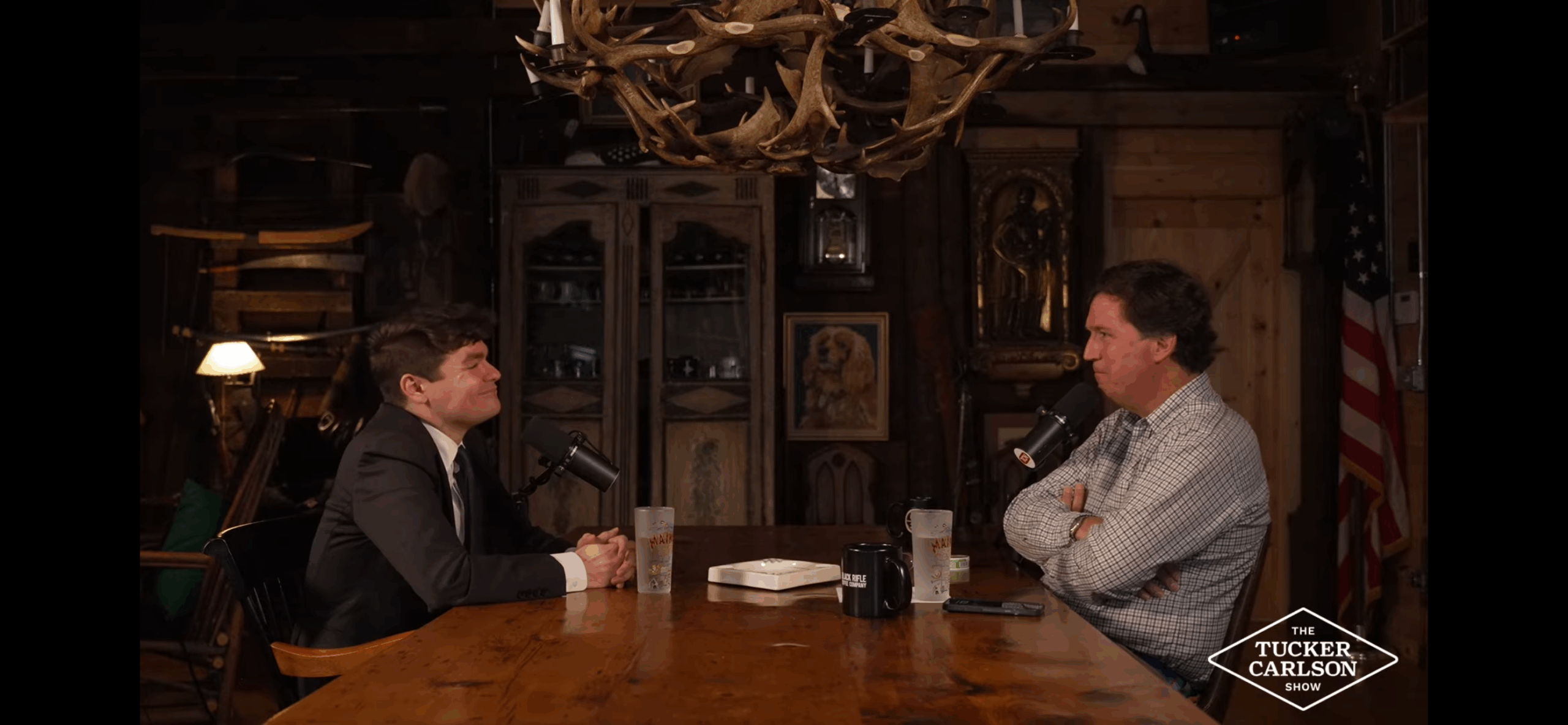
Inspired by the Tucker Carlson & Nick Fuentes Interview — and why understanding rhetoric like theirs may help us reach young men before it’s too late.
1. Why I Listened to the Conversation
Before I go further, I want to be clear: I do not endorse Nick Fuentes or Tucker Carlson, nor the racist, misogynistic, or extremist remarks that have come from either of their platforms. Their words have caused genuine harm—especially to women and communities of color.
My goal in listening to their recent conversation wasn’t to amplify their views, but to understand how rhetoric like this shapes a generation of young men who are turning away from empathy, relationships, and even their own emotional growth.
As a relationship coach—and someone who once worked in mental-health nursing—I believe that to help heal what’s broken, we must first understand how it got that way.
It’s not about agreement; it’s about awareness. Because ignoring these voices doesn’t make them disappear—it allows them to grow unchecked.
2. The Radicalization Trap
Nick Fuentes admitted that he performed poorly in college because he became consumed by online political rhetoric. He also confessed that 2015–2016 were pivotal years when many young men were “red-pilled” or radicalized by anger and identity politics.
Had he immersed himself more in his college community—read more books, listened to professors, interacted with people from different backgrounds—perhaps he would have found a more balanced worldview. Education opens minds; isolation breeds extremism.
I often remind my own clients—many of whom are young men—that intellectual humility is one of the most attractive human traits. When you study history and culture, you learn why things are the way they are.
For example, I have African and Native American roots; my ancestors helped build this country in chains. Knowing that history changes how you see “America First.” It reminds us that the American Dream was always meant to include everyone.
3. What They Get Right—and What They Miss
Fuentes spoke passionately against marijuana, porn, and heavy drinking. On that point, I actually agree: today’s high-potency marijuana is not what it used to be, and constant escapism through weed, alcohol, or screens drains motivation.
He also said many boys are exposed to porn as early as age 10. Whether that’s statistical or anecdotal, the effect is real: prolonged porn use teaches young men to objectify women, reducing intimacy to consumption.
Where I disagree is in who he blames for men’s disconnection. Fuentes insists women have “become too liberal” and that feminism ruined relationships. Tucker Carlson echoes that, asking whether modern women truly believe gender no longer exists. But this framing misses a deeper truth.
Women didn’t embrace feminism to reject men—they embraced it to survive men’s control. For centuries, wives had no legal protection from abuse, no financial independence, and no recourse if their husbands harmed them. Until the early 1990s, marital rape and domestic violence were often minimized or excused in U.S. law. Feminism was never about hating men; it was about securing safety and agency.
So when women fight for autonomy today—over finances, work, or reproductive rights—it’s not “toxic feminism.” It’s generational memory saying: I can’t go back to being powerless.
Clarifying My Position
While I could understand some of the points raised in their conversation, I did not agree with much of what either Nick or Tucker had to say about women and relationships. Some of their comments about abortion, women’s bodies, and “liberal women” were not only dismissive—they were dangerous.
Tucker even said he doesn’t know a single happily married liberal woman. That’s an absurd generalization and deeply disconnected from reality.
The way they used terms like “simps” (a slang term meant to shame men who are kind or attentive to women) or praised patriarchal hierarchy as the natural order shows how far we still have to go in creating real emotional equality between men and women.
Being the “head of the household” doesn’t make one person the ruler; it makes them equally responsible for the love, safety, and peace within that home.
Still, listening to their discussion reminded me how serious and widespread this issue has become. There is a growing number of young men forming their worldview from rhetoric like this—and that’s exactly why we need more conversations rooted in empathy, education, and shared humanity.
4. The Historical Context Men Often Don’t Know
Many men simply don’t realize how recent women’s rights truly are:
-
Marital-abuse laws were barely enforced until the 1990s.
-
Credit and property rights for women became legal only in the 1970s.
-
Equal pay remains unfinished business even now.
Those weren’t ideological fights; they were survival fights. That’s why modern women sometimes appear hyper-independent or hesitant to rely on men. It’s not rebellion—it’s trauma adaptation.
And yes, some women now turn to platforms like OnlyFans. Fuentes cites that as proof of “liberal decay,” but I see it as evidence of women seeking control over their bodies and income in a system where they still don’t feel protected. It’s not the ideal solution—it’s a coping mechanism.
5. The Relationship Reframe (A Coach’s Take)
As a relationship coach, I work with men and women who are trying to create healthy, meaningful romantic relationships. Where I see many struggling is in the disconnect and the failure to communicate—both verbally and nonverbally. Most communication isn’t what we say; it’s what people see and feel.
With constant online messaging telling us who we should be, what to think, and what “perfect” relationships look like, it’s no wonder people are struggling to connect authentically.
Another factor rarely discussed—especially not on that show—is how capitalism itself has distorted modern love. The endless chase for status, money, and comparison has made both men and women feel “not enough.”
Many of my male clients—some engineers, others in blue-collar work—are struggling to find stable, well-paying jobs that make them feel confident in providing for a family. Meanwhile, many of my female clients are highly educated and financially secure but frustrated by the lack of emotionally mature partners.
It’s a difficult paradox: men feel emasculated by the economy; women feel pressured by it. Both are victims of a system that convinces us our worth is tied to our productivity.
It’s not the dream that’s wrong—it’s the capitalism that makes the dream unreachable. And when that happens, men and women start blaming each other instead of the system itself.
I tell my clients: relationships are not cookie-cutter templates. You create the kind of relationship that works for you. It’s not about Hollywood, Disney, or Instagram aesthetics—it’s about two people defining what partnership looks like on their own terms.
6. Six Steps for Men and Women to Reconnect with Love and Reality
-
Limit digital escapism. Reduce porn, rage-content, and endless scrolling. Reconnect with the real world.
-
Practice empathy and open-mindedness. Listen to understand—not to argue.
-
Create the kind of relationship you want. Write down what you want, why you want it, and what you’re willing to do to get it.
-
Make a contract with yourself. Commit to growth—emotionally, mentally, and spiritually.
-
Educate yourself. Read books, attend workshops, and engage with people outside your echo chamber.
-
Reconnect offline. Have real conversations. Practice presence. Remember that love begins with genuine human connection—not digital perfection.
7. Final Thoughts
Whether you agree or disagree with Tucker Carlson or Nick Fuentes, their conversation reveals a deep crisis of loneliness and misunderstanding between men and women. The gap isn’t just political—it’s emotional.
If we’re going to heal that divide, we have to start listening to one another with empathy instead of accusation.
Love isn’t political.
It’s human.
💞 Further Reading
-
Calling in the One – A powerful guide for anyone ready to attract real love.
-
The Body Keeps the Score – Understanding how trauma affects connection and intimacy.
-
Related article: How to Manifest Your Soulmate and Call in the One
💬 Ready to Rewrite Your Love Story?
Book a Discovery Session with me and learn how to build healthier, more meaningful relationships.
Join the Finding Happily Circle newsletter for ongoing insights, emotional-wellness tools, and modern-love reflections.
Share This Story, Choose Your Platform!

Collette Gee is a Dating & Relationship Specialist and Author, that helps women and men create and sustain healthy, meaningful relationships be it: romantic, family, platonic, or professional. Her mission is to help people love harmoniously and successfully.