Share This Story, Choose Your Platform!
It’s Was More Than A Backache
When I discovered that an old back injury I thought was long healed actually stemmed from a violent incident in my past, I was reminded of something profound: the body really does keep the score.
For many of us who’ve experienced trauma — whether through domestic violence, stress, or years of neglecting ourselves — our bodies store those memories in ways we don’t always recognize. It’s not just emotional; it’s physical. Chronic pain, autoimmune conditions, fatigue, and insomnia can all be our bodies’ way of speaking the truth we’ve tried to silence.

The Link Between Trauma and the Body
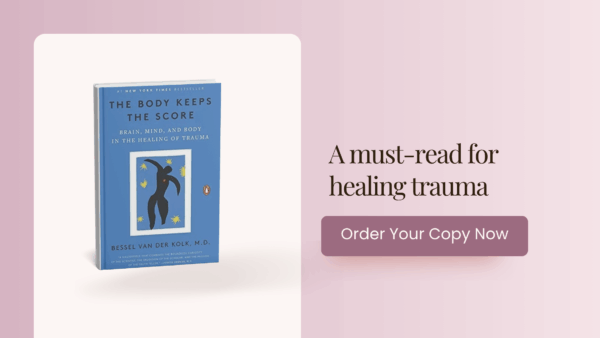
In The Body Keeps the Score by Dr. Bessel van der Kolk, the author explores how trauma reshapes both body and brain, compromising our capacity for pleasure, engagement, self-control, and trust.
For me, this message hit close to home. Between years of working overnight nursing shifts, the stress of past relationships, and the long-term effects of domestic abuse, my body was fighting a battle I didn’t even realize I’d started.
Autoimmune disorders, like mine, can be viewed as the body turning against itself — but sometimes that “attack” reflects years of internalized pain, guilt, or unworthiness. We don’t always consciously choose these messages, but our body hears everything we say to ourselves.
Letting Go Through Forgiveness and Movement
When I work with clients healing from relationship trauma, I always encourage a combination of inner work and body work.
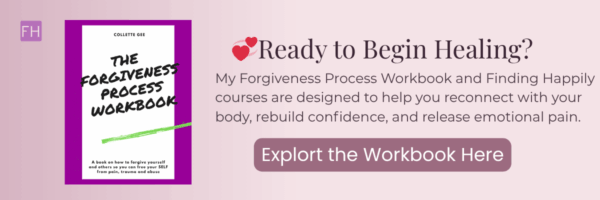
Tools like The Forgiveness Process Workbook can help you release people, events, or emotions that no longer serve you. Writing in cursive — slowly, repeatedly — helps create an ideomotor response, a neurological process that releases stored tension and signals the brain that it’s safe to let go.
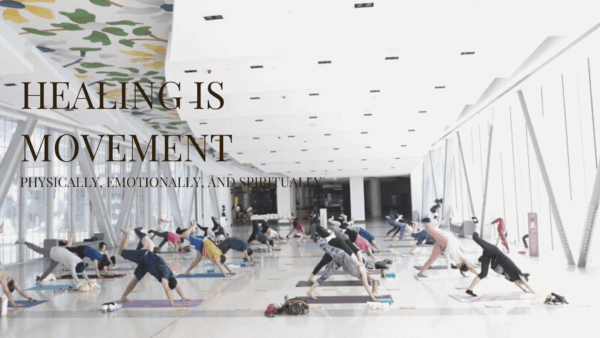
Pair that with movement — yoga, Pilates, walking, or gentle stretching — and you start to physically move trauma out of your system. As someone who’s lived through domestic violence and now manages autoimmune flare-ups, I’ve learned that healing isn’t only about what we think, but how we move, breathe, and rest.
Generational Healing and Awareness
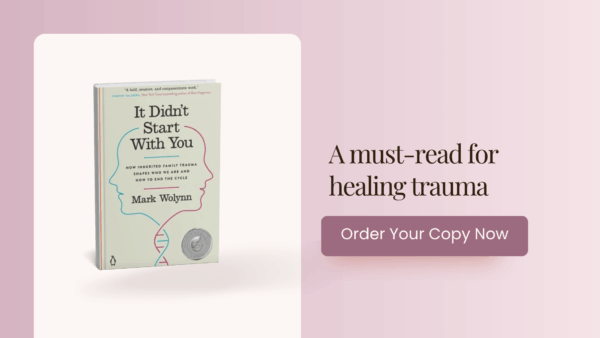
Trauma doesn’t always start with us. In It Didn’t Start With You by Mark Wolynn, the author explores how inherited trauma can pass through generations, shaping our fears, habits, and even our bodies’ responses to stress.
By understanding these patterns, we reclaim power — not just for ourselves, but for our children and their children.
As a Certified Violence Prevention Specialist, I’ve dedicated years to helping people recognize the signs of abuse, rebuild their self-worth, and create a life rooted in peace and safety.
October marks the close of Domestic Violence Awareness Month, but for survivors, awareness doesn’t end here. It continues in the daily act of choosing to heal.
If You’re Struggling Today
If you or someone you know is experiencing domestic abuse, please reach out to a local or international support line. In the U.S., the National DV Hotline is 1-800-799-7233 or visit thehotline.org.
You are not alone. Healing takes time, but every act of self-care is a declaration of survival and self-love.

Collette Gee is a Dating & Relationship Specialist and Author, that helps women and men create and sustain healthy, meaningful relationships be it: romantic, family, platonic, or professional. Her mission is to help people love harmoniously and successfully.